



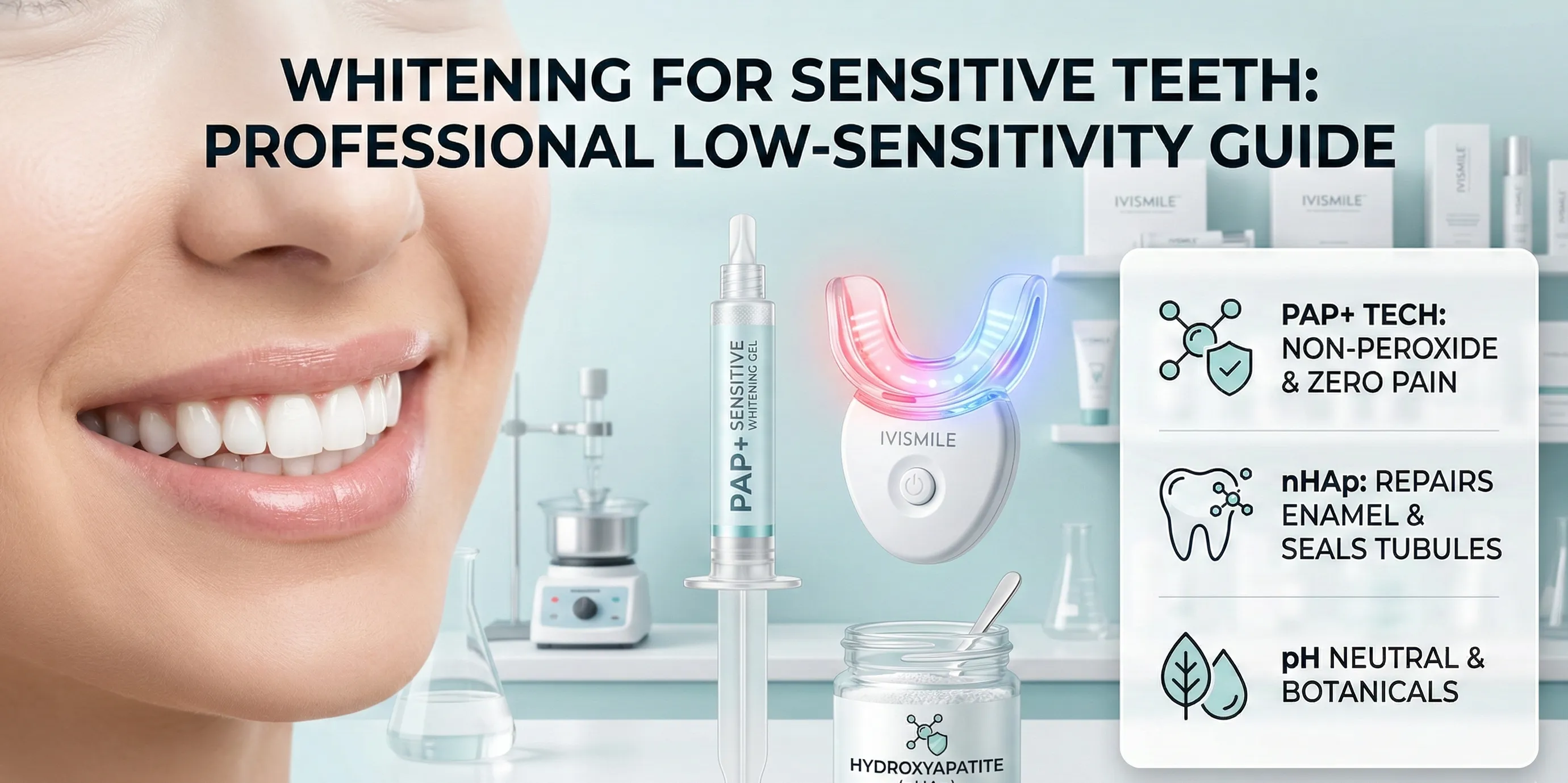
 Yes, sensitive teeth can be whitened safely and effectively. In the modern oral care market, the “pain-to-gain” model is obsolete. The key to success lies in shifting from high-concentration peroxide to PAP+ technology and remineralizing agents like Hydroxyapatite. For dental brands and wholesalers, offering these low-sensitivity alternatives is the most effective way to capture the 30%–50% of global consumers who avoid traditional whitening due to dentin hypersensitivity.
-
Market Insight: Why Focus on Sensitive Teeth?
The “Sensitive” segment is no longer a niche; it is a primary driver of the home-whitening industry. Data shows that consumers are increasingly prioritizing “Enamel Safety” over “Maximum Speed.”
- Higher Retention: Users who don’t feel pain are 70% more likely to complete their whitening cycle and repurchase.
- Reduced Liability: For B2B distributors, low-sensitivity products mean fewer consumer complaints and higher ratings on e-commerce platforms like Amazon or Shopify.
- Compliance Advantage: In many regions (especially the EU), strict limits on Peroxide make non-peroxide, low-sensitivity alternatives the only viable path for mass-market retail.
-
Comparison: Traditional vs. Low-Sensitivity Technology
To understand the shift, we must analyze the chemical interaction with the tooth structure:
| Feature | Traditional Whitening (HP/CP) | Low-Sensitivity (PAP+) |
| Active Ingredient | Hydrogen or Carbamide Peroxide | Phthalimidoperoxycaproic Acid |
| Reaction Type | Free radical oxidation (aggressive) | Selective covalent oxidation (gentle) |
| Nerve Impact | High risk of “zingers” (nerve shocks) | Zero to minimal nerve stimulation |
| Enamel Impact | Temporary dehydration & porousness | Reinforces surface with Hydroxyapatite |
| pH Level | Often acidic (pH 3.5–5.5) | Neutral (pH 6.5–7.0) |
| Shelf Life | Requires refrigeration to stay stable | Highly stable at room temperature |
-
Deep Dive: The Science of Pain-Free Results
A professional-grade sensitive whitening formula is a “triple-threat” combination of chemistry and biology:
A. The Power of PAP+
Unlike Hydrogen Peroxide, which releases free radicals that can attack both stains and healthy soft tissue, PAP+ focuses exclusively on the double bonds of the molecules that cause tooth discoloration. By breaking these bonds without releasing reactive oxygen species, it delivers high-contrast whitening results without the inflammatory response that triggers nerve pain.
B. Hydroxyapatite (nHAp) – The “Liquid Enamel”
Enamel is 97% Hydroxyapatite. During the whitening process, microscopic “pores” or tubules in the dentin can become exposed.
- Sealing Action: Nano-Hydroxyapatite (nHAp) particles are small enough to enter these tubules and physically plug them.
- Remineralization: It helps replace lost minerals in the enamel, making the teeth smoother, stronger, and more resistant to “re-staining” from coffee or tea.
C. Potassium Nitrate: The Nerve Soother
In professional-grade kits, we incorporate Potassium Nitrate as a secondary line of defense. It travels through the enamel into the dentin to “calm” the nerve endings. By desensitizing the nerve signals, it ensures that even users with historically thin enamel experience a comfortable treatment.
-
Strategic Product Solutions for Your B2B Catalog
To effectively serve the sensitive teeth market, your brand should offer a tiered product selection:
- PAP+ Whitening Strips: The “Entry Level” hero. Using a dry-gel technology, these strips adhere firmly to the teeth, preventing the whitening agent from leaking onto the gums (the primary cause of soft-tissue irritation).
- V34 Color Corrector: The “Instant Fix.” This uses color theory—purple is the direct opposite of yellow on the color wheel. By applying a water-soluble purple dye, it neutralizes yellow undertones without any chemical reaction or sensitivity.
- Professional LED Kits: Pair your PAP+ gels with a dual-light device. Use Blue Light for the whitening acceleration and Red Light for its anti-inflammatory properties to soothe the gums during the session.
- Desensitizing “Blue Gel” Syringes: A high-margin add-on for any kit. It provides immediate relief for users with extreme pre-existing sensitivity and enhances the “professional feel” of your brand.
-
Manufacturing & Quality Control (B2B Checklist)
When sourcing from a manufacturer like IVISMILE, ensure your products meet these three non-negotiable standards:
- pH-Neutral Stability: Highly acidic gels are a major cause of sensitivity. Ensure your gel is lab-tested to be at a pH of 6.5–7.0.
- Global Compliance: Your products must carry CPSR (Cosmetic Product Safety Report) and MSDS documentation. This is vital for legal distribution in the UK, EU, and US.
- Botanical Infusions: Look for formulations that include Aloe Vera, Chamomile, or Pomegranate seed extract. These natural ingredients reduce inflammation and provide a “premium” ingredient list for your marketing.
-
Conclusion: The Future is Gentle
The dental beauty industry is moving away from “maximum strength” toward “maximum comfort.” By specializing in PAP+ and nHAp-based systems, you aren’t just selling a whiter smile—you are selling a painless, premium experience. This strategy is the fastest way to build trust, reduce returns, and dominate the sensitive-care demographic in 2026.
Post time: Feb-28-2026