



The Paradigm Shift in Oral Care: Why Fluoride’s Reign is Fading
For decades, fluoride has been the undisputed king of preventive dental care. Its efficacy in strengthening enamel and preventing cavities is well-documented. However, the commercial landscape of oral hygiene is undergoing a profound transformation. A growing segment of consumers, driven by safety concerns, an affinity for “clean” labels, and a desire for naturally derived alternatives, is actively seeking fluoride-free options.
This is not a niche trend; it is a major market shift. For B2B stakeholders—private label brands, retailers, and OEM/ODM partners—this change presents a significant, lucrative opportunity. The ingredient that is perfectly poised to fill this vacuum is Hydroxyapatite (HA).
This article will serve as your essential guide to understanding the science, seizing the market potential, and navigating the OEM/ODM pathways to launch a successful, compliant, and high-margin hydroxyapatite-based product line.
The Hydroxyapatite Advantage: A Scientific Deep Dive
Hydroxyapatite is the most important mineral found in teeth and bones, making up approximately 97% of tooth enamel. Its use in oral care is not a recent discovery; its synthetic counterpart, Nano-Hydroxyapatite (n-HA), has been clinically utilized in Japan for decades.
How HA Achieves Superior Remineralization
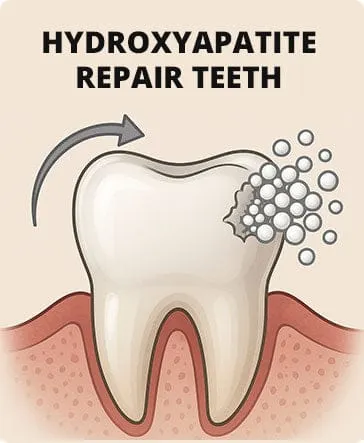
The fundamental mechanism of HA is its biomimetic nature. Unlike fluoride, which forms a new structure (fluorapatite) on the enamel surface, n-HA directly works with the existing tooth structure:
- Direct Integration: Due to its nanoscale size, n-HA particles penetrate the microscopic fissures and tubules of the enamel.
- Bio-Repair: It directly integrates into the damaged enamel, filling and repairing the crystal structure lost through acid erosion. This process is known as remineralization.
- Tubule Sealing: In sensitive teeth, n-HA physically seals the dentinal tubules (small channels leading to the nerve), providing an immediate and lasting anti-sensitivity effect.
The Crucial Safety Factor: Addressing Consumer Concerns
The primary commercial driver behind the “fluoride-free” market is safety. While fluoride is safe when used correctly, concerns exist regarding dental fluorosis (caused by excessive ingestion, particularly in children) and systemic ingestion risks.
Hydroxyapatite is unequivocally non-toxic and biocompatible. Since it is the body’s natural building block, it poses no risk if swallowed, making it the preferred ingredient for children’s toothpaste and for health-conscious adults seeking a “swallow-safe” product. This safety profile is a powerful marketing tool for private label brands.
Market Dynamics: The Surging Demand for Fluoride-Free
The shift towards HA is backed by tangible market growth. The global oral hygiene market is vast, but the fastest-growing sub-segment is the natural and clean-label category, where fluoride-free products reside.
Key Consumer Segments Driving Growth
Targeting the “fluoride-free” market means identifying the specific consumers willing to pay a premium for HA products:
- Parents of Young Children: This is the most significant segment. Concerns over children swallowing toothpaste and the risk of fluorosis make parents actively seek safe, effective alternatives like n-HA.
- The “Clean Beauty” Consumer: These shoppers scrutinize ingredient lists, favor natural mineral compounds over synthesized chemicals, and are loyal to brands prioritizing transparency and safety.
- Individuals with Health Conditions: People with thyroid issues, kidney conditions, or those following specific holistic health protocols often avoid fluoride as a standard measure.
- The Early Adopter/Premium Buyer: Consumers who research and demand the latest clinically proven, high-tech solutions (such as nano-hydroxyapatite) are willing to spend more, leading to higher margins for brands.
Leveraging the Clinical Evidence
For B2B brands, marketing HA is a case of science-meets-sales. Numerous clinical studies have validated n-HA’s efficacy in preventing caries and promoting remineralization, often demonstrating non-inferiority to fluoride. Positioning your product on a foundation of scientific evidence rather than merely being “natural” is essential for capturing the premium market share.
Commercial Opportunity: Hydroxyapatite in OEM/ODM Product Development
The opportunity for OEM/ODM (Original Equipment Manufacturing/Original Design Manufacturing) partners lies in offering turnkey solutions that allow clients to quickly enter this high-growth sector.
A. Strategic Product Line Expansion
OEM partners should offer diverse HA-based products to maximize client revenue potential:
- Standard HA Toothpaste: The core product, positioned as the daily fluoride replacement.
- Sensitive HA Toothpaste: Enhanced n-HA concentration for targeted anti-sensitivity claims.
- Children’s HA Gel: Zero-risk, appealing flavors, and colorful packaging to capture the crucial children’s market.
- Specialty Products: HA-infused mouthwash or enamel boosters designed for post-whitening or orthodontic care.
B. Table: Commercial Comparison for Product Development
The decision to choose n-HA over fluoride for a new product line is a commercial one, based on safety, marketing claims, and potential margin. The following table illustrates the key differences from a product development perspective:
| Feature | Fluoride-Based Products | Hydroxyapatite (n-HA) Products | Commercial Implication (OEM/ODM) |
| Regulatory Risk (Ingestion) | Moderate (Risk of Fluorosis, especially for children under 6). | Very Low (Non-toxic, bio-safe even if swallowed). | Strong Safety Claim: Ideal for launching children’s and ‘clean-label’ products. |
| Marketing Claim | Cavity Prevention, Enamel Strengthening. | Remineralization, Anti-Sensitivity, Bio-Repair, Safe. | Higher premium pricing potential due to multiple functional claims. |
| Cost of Goods Sold (COGS) | Lower (Established commodity pricing). | Higher (Advanced raw material and formulation costs). | Higher Margin Potential: Though COGS is higher, consumers accept a premium price point (often 2-3x higher than standard toothpaste). |
| Target Market | Mass Market, Value-Conscious. | Premium Market, Health-Conscious, Parents, Specialty Clinics. | Focus on high-value B2B clients and specialty distribution channels. |
| Formulation Complexity | Standardized and well-known. | Requires expertise in nanomaterial dispersion to ensure efficacy and stability. | Supplier Vetting: Only work with manufacturers (like us) who master n-HA formulation technology. |
C. The OEM/ODM Advantage in n-HA Formulation

Successfully launching an n-HA product is highly dependent on the manufacturing partner’s technical expertise. Nano-Hydroxyapatite must be properly dispersed in the paste to remain effective and stable over time.
- Precision Manufacturing: Expertise in handling nanomaterials to ensure particles remain active and correctly sized for maximum penetration.
- Stability Testing: Comprehensive testing protocols (shelf life, heat stability) to guarantee the product’s efficacy remains constant through distribution and use.
- Regulatory Guidance: Providing clients with necessary documentation (SDS, CoA) and ensuring compliance with destination market regulations (e.g., EU, FDA registration).
- Scale and Flexibility: Offering flexible Minimum Order Quantities (MOQs) to allow new private labels to test the market, while having the capacity to scale quickly for large retailers.
Navigating Compliance and Sourcing: Keys to Launch Success
For B2B clients, the transition to HA must be smooth and fully compliant. Regulatory bodies treat HA as a cosmetic ingredient in many jurisdictions, but the claims made (e.g., “cavity prevention”) require careful wording to meet local advertising and safety standards.
-
Ingredient Vetting and Purity
The source and purity of the n-HA raw material are paramount. Clients must ensure their OEM partner sources HA with:
- Optimal Nanoparticle Size: Typically less than 50 nanometers for maximum remineralization and penetration.
- High Purity: Avoidance of trace contaminants, which is vital for “clean label” marketing.
- Ethical Sourcing: Ensuring HA is synthetically derived, avoiding any bone-derived sources, which is a major factor for vegan and ethical consumers.
-
Marketing Claim Differentiation
Your OEM/ODM offering should guide clients on how to legally and powerfully market the product:
- Focus on Repair and Sensitivity: These are n-HA’s strongest differentiators from fluoride.
- Use “Safe for Swallowing” Claim: Highlight the children’s market appeal.
- Avoid Overstated Claims: Ensure claims are scientifically substantiated to avoid regulatory backlash (e.g., claiming to replace dental fillings).
Conclusion: Future-Proofing Your Oral Care Brand
The trajectory of the oral care market is clear: safety, transparency, and advanced science are the new standards. The demand for effective, fluoride-free alternatives is accelerating globally.
For business leaders and product developers, partnering with an experienced OEM/ODM provider is the fastest and safest route to capitalize on this shift. By leveraging the proven science of Hydroxyapatite, you are not just launching another toothpaste; you are future-proofing your brand, building consumer trust, and securing a premium position in the competitive dental care landscape.
Post time: Dec-16-2025