



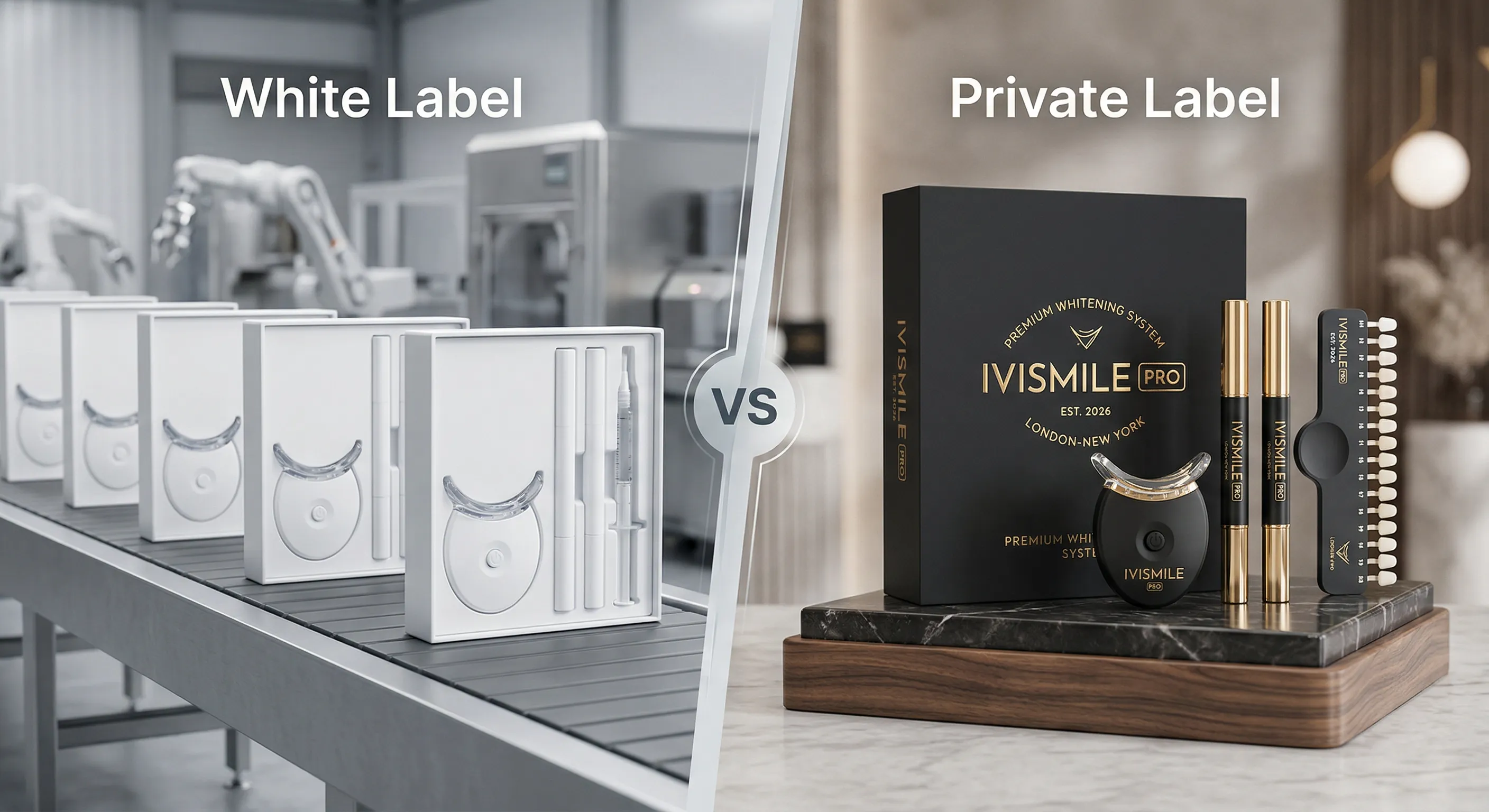
 Determining the most efficacious manufacturing model is a pivotal juncture for any burgeoning enterprise within the oral hygiene sector. As the global demand for sophisticated dental solutions escalates, entrepreneurs often find themselves sequestered between two primary procurement strategies: Private Label and White Label. While these nomenclatures are frequently interchanged by the uninitiated, their implications for brand equity, fiscal scalability, and market penetration are profoundly distinct.
This comprehensive analysis elucidates the nuances of Private Label vs. White Label, empowering you to discern which methodology aligns with your overarching corporate trajectory.
The Fundamental Dichotomy: Defining the Models
To navigate this landscape, one must first grasp the intrinsic mechanical differences that govern these production paradigms.
White Label Manufacturing refers to a “generic” product synthesized by a manufacturer, which is then rebranded by multiple retailers. In this scenario, the White Label teeth whitening product remains consistent across various vendors; only the external aesthetics—the logo and packaging—undergo alteration. It is the quintessential “plug-and-play” solution for those prioritizing speed over exclusivity.
Conversely, Private Label Manufacturing involves a bespoke collaboration where the product is engineered specifically for a single brand. This model permits granular control over the Private Label oral care formula, encompassing active ingredient concentrations, flavor profiles, and mechanical hardware specifications. It is an investment in intellectual property and long-term market differentiation.
Customization: The Pursuit of Market Exclusivity
In the hyper-competitive aesthetic dentistry market, the ability to offer a unique value proposition is indispensable.
Choosing White Label solutions often means entering a saturated ecosystem where your primary lever for competition is price. Since the underlying White Label formula is accessible to your competitors, establishing a premium brand identity becomes an uphill battle. It is an excellent vehicle for testing market appetite without the burden of heavy research and development expenditures.
However, if your objective is to cultivate a legacy brand, Private Label customization is non-negotiable. This pathway allows for the integration of avant-garde ingredients such as PAP+ non-peroxide agents or Nano-Hydroxyapatite for enamel remineralization. By refining a Private Label teeth whitening kit to meet specific consumer pain points—such as dentin hypersensitivity—you transform a commodity into a specialized clinical solution.
Financial Logistics: Capital Expenditure and MOQs
Fiscal prudence is the bedrock of a sustainable oral care brand. The financial architecture of these two models varies significantly regarding Minimum Order Quantities (MOQs) and upfront investment.
White Labeling typically boasts lower MOQs, as the manufacturer produces the base product in gargantuan volumes. This lowers the barrier to entry, making it highly attractive for boutique startups or influencers looking to monetize their audience with minimal risk. The White Label procurement process is streamlined, often requiring only a few weeks from contract to delivery.
In contrast, Private Labeling demands a more robust capital outlay. Because the manufacturer must adjust production lines to accommodate your unique Private Label specifications, they require higher bulk order volumes to maintain profitability. While the initial Private Label investment is steeper, the long-term unit cost is often lower, yielding superior profit margins as your brand scales and achieves economies of scale.
Regulatory Compliance and Quality Assurance
Navigating the labyrinthine regulations of the global dental market requires an unwavering commitment to safety and transparency. Whether you choose White Label vs. Private Label, ensuring your products meet ISO 13485 and GMP standards is paramount.
With White Labeling, the burden of clinical testing and certification typically rests with the manufacturer. You are essentially “leasing” their compliance. This provides a safety net for new entrants. Nevertheless, you must remain vigilant, ensuring that the White Label manufacturer possesses valid MSDS and CPSR documentation for the specific regions you intend to target.
The Private Label model necessitates a more hands-on approach to quality assurance. Since you are modifying the chemical composition or mechanical design, you must ensure that your unique Private Label formulation undergoes rigorous third-party validation. This direct oversight, while demanding, ensures that your professional whitening products are consistently superior to generic alternatives, thereby fortifying consumer trust.
Brand Control and Long-Term Scalability
The ultimate question remains: which model facilitates a more robust exit strategy or long-term growth?
White Labeling is often a transient phase. While it generates immediate cash flow, the lack of proprietary technology makes the business less attractive to potential acquirers. If a competitor decides to undercut your price on the exact same White Label kit, your brand loyalty may prove fragile.
Private Labeling builds a “moat” around your business. By owning a proprietary Private Label design or a unique chemical patent, you create an asset that appreciates over time. In the eyes of a B2B partner or a strategic investor, a brand that possesses its own custom-engineered oral care line is infinitely more valuable than a mere reseller of generic goods.
Frequently Asked Questions (FAQ)
Q: Can I transition from White Label to Private Label later? Absolutely. Many successful enterprises initiate their journey with White Label products to generate initial capital and market data. Once they identify a specific niche or “hero product,” they reinvest their profits into Private Label development to secure exclusivity.
Q: Which model is better for high-end dental clinics? For clinical environments where professional efficacy is scrutinized, Private Labeling is typically preferred. It allows the practitioner to offer a professional whitening system that cannot be found on mass-market retail shelves, maintaining the prestige of the clinic.
Q: Are Private Label products always more expensive? Not necessarily. While the Private Label startup cost is higher due to tooling and R&D, the per-unit cost on large-scale orders is frequently lower than White Label pricing, as you are not paying the “convenience premium” associated with off-the-shelf goods.
Final Verdict: Selecting Your Strategy
The choice between Private Label vs. White Label hinges upon your risk appetite and your vision for the future.
- Choose White Label if you require a rapid market entry, possess limited initial capital, and are satisfied with competing on branding and marketing rather than product innovation.
- Choose Private Label if you aim to disrupt the oral care industry with innovative technology, desire complete control over your supply chain, and seek to build a high-valuation asset with unique Private Label IP.
In the contemporary B2B dental landscape, the most successful brands are those that prioritize the end-user’s safety and satisfaction. Whichever path you pursue, ensure your manufacturing partner adheres to the highest international manufacturing protocols.
Post time: Mar-24-2026