



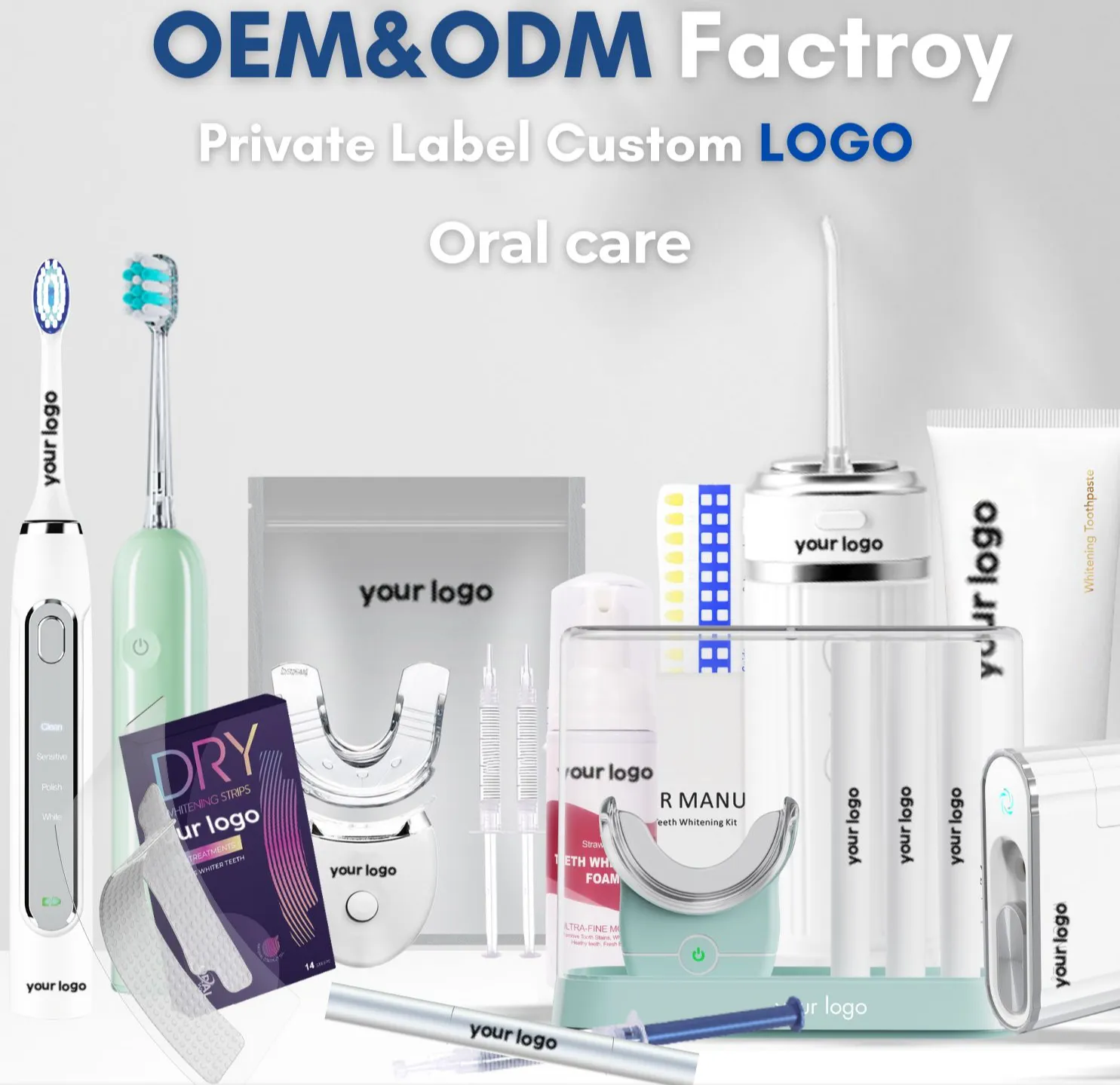
The global oral care market is undergoing a massive shift. What was once a slow-moving industry dominated by a few giants is now a $50 billion playground for agile startups. From PAP+ teeth whitening kits to smart ultrasonic toothbrushes, the barrier to entry has never been lower. However, for a new brand, the first hurdle is choosing a manufacturing partner.
Should you choose OEM or ODM? This decision will dictate your budget, your launch date, and your brand’s long-term survival. This comprehensive guide provides a deep dive into both models, specifically tailored for the oral care industry.
-
The Definitions: Breaking the Jargon
Before diving into the strategy, let’s clarify what these terms mean in the context of dental manufacturing.
-
ODM (Original Design Manufacturer): Often called “Private Labeling” or “White Labeling.” The manufacturer already owns the product design, the molds, and the tested formulas. You simply add your logo and choose your packaging.
- Example: Selecting a high-selling LED teeth whitening light from our catalog and printing your brand name on it.
-
OEM (Original Equipment Manufacturer): This is “Contract Manufacturing.” You provide the specifications—be it a unique ergonomic toothbrush handle or a patented chemical formula—and the factory handles the physical production.
- Example: Developing a brand-new water flosser with a specific pressure-sensing technology that doesn’t exist on the market yet.
-
Strategic Comparison: Control vs. Cost
To help you decide, we have analyzed the four pillars of manufacturing: Investment, Speed, Control, and Risk.
Pillar 1: Initial Investment (The Financial Barrier)
- ODM: This is the most budget-friendly route. Since the manufacturer has already covered the costs of R&D, tooling, and certifications, your only major expense is the inventory itself. For a startup, this preserves precious capital for marketing.
- OEM: This requires significant upfront capital. You are paying for industrial design, 3D prototyping, and—most importantly—the injection molds. A custom mold for a high-quality electric toothbrush can cost anywhere from $15,000 to $50,000 depending on the complexity.
Pillar 2: Time to Market (The Speed Factor)
- ODM: In the world of e-commerce, speed is everything. With ODM, you are choosing a product that is already on the production line. Once the artwork is approved, lead times are typically 3 to 5 weeks.
- OEM: The development cycle is long. Designing, prototyping, testing for dental safety, and creating molds can take 6 to 12 months. If you are trying to catch a seasonal trend, OEM may be too slow.
Pillar 3: Product Differentiation (The Competitive Moat)
- ODM: Differentiation is difficult. Other brands might be using the same mold. You must rely on superior packaging, better customer service, or a unique brand story to stand out.
- OEM: This creates a “Moat.” Because you own the design and the mold, your competitors cannot easily copy your product. This is essential if you plan to pitch to high-end retailers or dentists who demand exclusivity.
-
The Technical Side: Oral Care Formulas & Safety
B2B buyers in the dental space must worry about more than just aesthetics. You are dealing with products that go into the mouth.
For ODM Buyers:
When choosing a private label product, ask about the Chemical Stability. For instance, if you are buying whitening gels, does the manufacturer offer PAP+ (Phthalimidoperoxycaproic Acid)? This is a safer, non-peroxide alternative that is currently dominating the EU and Australian markets. Choosing an ODM product that already has a CPSR (Cosmetic Product Safety Report) will save you thousands of dollars in testing fees.
For OEM Buyers:
You have the freedom to innovate, but you also carry the burden of safety. If you are creating a new formula, you must undergo:
- Stability Testing: To ensure the gel doesn’t lose its potency over time.
- Microbiological Testing: To ensure no harmful bacteria grow in the product.
- Bite-Force Testing: If you are designing a new mouthpiece or toothbrush, it must withstand significant physical stress without breaking.
-
Global Compliance: The Non-Negotiable
You cannot sell oral care products without the right paperwork. This is where many startups fail.
- FDA (USA): Essential for any whitening product or electric device entering the American market.
- CE & UKCA (Europe/UK): Required for all electronic dental products.
- ISO 13485: This is the gold standard for medical device manufacturing. Even if your product isn’t strictly “medical,” a factory with this certification ensures much higher quality control.
- RoHS & REACH: These ensure that your toothbrushes and devices don’t contain hazardous substances like lead or phthalates.
-
Step-by-Step Guide: How to Start
Whether you choose OEM or ODM, follow this roadmap to ensure a smooth partnership with your factory.
Step 1: Market Research
Don’t just launch a product; solve a problem. Look at Amazon reviews of competitors. Do users complain that the whitening gel tastes bad? Is the toothbrush too loud? Use this data to choose your ODM features or OEM designs.
Step 2: Sample Testing
Never place a bulk order without testing samples. Check for:
- Build Quality: Does the plastic feel cheap or premium?
- Functionality: Does the timer on the whitening light actually work?
- Flavor/Sensitivity: Is the gel comfortable for the user?
Step 3: Negotiating MOQs (Minimum Order Quantities)
Startups often struggle with high MOQs.
- ODM MOQs are usually lower (e.g., 500–1,000 units).
- OEM MOQs are higher (e.g., 3,000–5,000 units) because the factory needs to recoup the setup time for custom lines.
Step 4: Quality Control (QC)
Hire a third-party inspection agency or request a “Pre-shipment Inspection Report” from the factory. In oral care, a 1% defect rate is too high—every product must be perfect.
-
Case Study: The Hybrid Success Model
Most of our successful clients at IVISMILE don’t pick one model and stay there forever. They use the Ladder Strategy:
- Year 1 (The Test): Launch with an ODM Teeth Whitening Kit. It’s low risk and builds immediate cash flow.
- Year 2 (The Feedback): They collect thousands of customer reviews and realize their customers want a more compact, travel-friendly version.
- Year 3 (The Innovation): They use their profits to fund an OEM project for a unique, travel-sized whitening device that solves the specific pain point they discovered in Year 1.
-
Conclusion: Making the Final Call
There is no “better” model—there is only the model that fits your current business stage.
- Choose ODM if you are a startup that needs to launch fast, preserve capital, and focus 100% on marketing and sales.
- Choose OEM if you have a unique product vision, a large budget, and want to build a long-term competitive advantage through innovation.
At [Your Website Name], we understand that your brand’s reputation depends on the quality of the products we build. Whether you are looking for a reliable private label partner or a sophisticated contract manufacturer for your next big invention, we have the expertise and the certifications to make it happen.
Ready to bring your oral care brand to life? [Click here to schedule a consultation with our Project Managers] or [Download our 2026 Product Catalog].
Post time: Feb-03-2026