



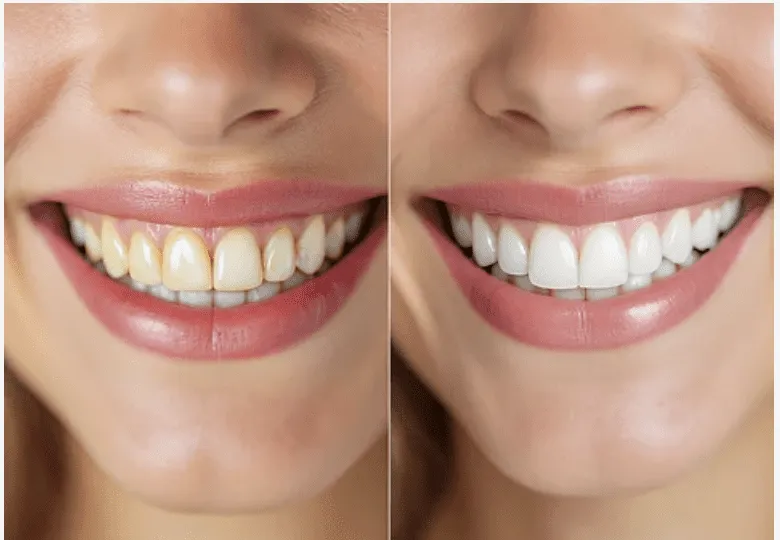
If you want to whiten your teeth without damaging your enamel, you must avoid these five critical errors: using acidic DIY remedies (like lemon juice), over-brushing with highly abrasive charcoal pastes, ignoring the “White Diet” post-treatment, whitening over dental restorations, and using ill-fitting trays that burn gums. This guide provides the scientific facts on why these methods fail and how to safely achieve a brighter smile.
-
Using “Natural” Acids: The Enamel Erosion Trap
Many people believe that rubbing acidic substances like lemon juice, apple cider vinegar, or strawberries on their teeth will bleach stains. This is a dangerous misconception that trades short-term brightness for long-term dental decay.
- The Science of pH: Your tooth enamel begins to demineralize at a pH of 5.5. Lemon juice has a pH of approximately 2.0, and apple cider vinegar sits around 3.0. These are powerful solvents that do not “clean” the tooth; they dissolve the calcium phosphate structure of your enamel.
- The Irreversible Result: Once enamel is dissolved, it is gone forever. As the protective layer thins, the yellowish dentin underneath becomes more visible. This creates a paradox: the more you use “natural” acids to whiten, the yellower your teeth will eventually appear.
- The Fix: Never use fruit acids for whitening. Use pH-balanced, dental-grade whitening agents that use oxidation rather than corrosion to lift stains.
-
Overusing High-RDA Abrasive Toothpastes
It is a common mistake to think that scrubbing harder with “intense” whitening or charcoal toothpaste leads to faster results. In reality, you are likely causing mechanical wear.
- Understanding RDA Levels: Every toothpaste has an RDA (Relative Dentin Abrasivity) value. A score of 0-70 is low abrasive, while 150-250 is considered harmful for long-term use. Many charcoal pastes fall into the high-abrasive category.
- The Sandpaper Effect: Using high-RDA pastes is like using sandpaper on a polished surface. It removes surface stains but leaves microscopic scratches that actually make it easier for new stains from coffee and tea to stick to your teeth in the future.
- The Fix: Switch to a toothpaste with a low RDA (under 100). Look for formulas containing Nano-Hydroxyapatite (nHAp), which fills in surface scratches and helps remineralize the enamel while you brush.
-
Breaking the “White Diet” During the 48-Hour Window
The most common reason for failed professional whitening is failing to follow the White Diet immediately after a treatment session. This is the “Golden Window” where your results are either locked in or ruined.
- The Science of Porosity: Whitening treatments (whether peroxide or PAP-based) temporarily open the dentinal tubules. Think of your teeth as a dry sponge during the 48 hours following a treatment. They are primed to absorb any liquid they come into contact with.
- The Re-Staining Disaster: If you consume dark pigments (tannins in wine, chromogens in coffee, or artificial dyes in soda) during this window, the pigments settle deeper into the tooth structure than they were before the treatment.
-
The Fix: The White Diet Checklist:
- Allowed: Chicken, turkey, white fish, white rice, pasta with white sauce, cauliflower, peeled potatoes, and plain water.
- Strictly Avoid: Coffee, tea, red wine, soy sauce, chocolate, beets, and smoking.
-
Attempting to Whiten Non-Natural Dental Work
A frequent mistake is applying whitening gels to crowns, veneers, fillings, or bondings, expecting them to change color along with your natural teeth.
- Material Science: Bleaching agents like hydrogen peroxide or carbamide peroxide work by breaking down organic carbon bonds in your natural tooth structure. Synthetic materials like porcelain, ceramic, and composite resin are chemically inert to these agents.
- The “Technicolor” Smile: Your natural teeth will whiten, but your dental restorations will remain their original shade. This creates a mismatched, uneven look that is often more noticeable than the original yellowing.
- The Fix: If you are planning to get crowns or veneers, always whiten your natural teeth first. This allows your dentist to match the porcelain to your new, lighter shade. If you already have restorations, the only way to “whiten” them is to have them replaced by a professional.
-
Using Generic, One-Size-Fits-All Whitening Trays
Using cheap, non-contoured “boil and bite” or rigid plastic trays is a leading cause of chemical burns and gum recession in the oral care industry.
- Gingival Irritation: Whitening gel is designed for enamel, which is highly mineralized and tough. Your gingival tissue (gums), however, is soft and sensitive. Generic trays allow the gel to leak and sit on the gums for 30–60 minutes.
- Chemical Burns: This results in “blanching” (white spots on the gums) and painful chemical burns. Repeated exposure can lead to permanent gum recession, exposing the tooth roots which cannot be whitened and are highly sensitive.
- The Fix: Use custom-fitted trays provided by a dentist or high-quality Teeth Whitening Strips featuring “Dry-Fit” or “Advanced Seal” technology. These are designed to adhere strictly to the tooth surface, preventing the gel from migrating to the soft tissues.
Deep Dive: Comparing Whitening Ingredients (PAP+ vs. Peroxide)
To make an informed choice, you must understand the active ingredients in your whitening kit.
| Feature | Hydrogen Peroxide | PAP+ (Phthalimidoperoxycaproic Acid) |
| Mechanism | Releases free radicals to break stains | Oxidizes stains without free radicals |
| Sensitivity | High (temporary nerve irritation) | Zero to Minimal |
| Enamel Safety | Can be acidic if not buffered | Non-acidic and enamel-safe |
| Speed | Very Fast | Fast |
| Gums | Can cause “tingle” or burns | Gentle on soft tissue |
Why we recommend PAP+: For the average user, PAP+ offers a much higher safety profile. It targets the discolored molecules (chromogens) without the “zingers” or sharp pains often associated with traditional peroxide gels.
Frequently Asked Questions (FAQ)
Q: How often should I whiten my teeth?
A: If using professional-grade strips or gels, a full cycle once every 4–6 months is usually sufficient. Over-whitening can lead to “translucent” teeth, which look grayish because they’ve lost too much mineral density.
Q: Can I whiten my teeth if I have sensitive teeth?
A: Yes, but you must avoid high-concentration peroxides. Look for formulas with Potassium Nitrate (a desensitizer) or switch to a peroxide-free PAP+ formula.
Q: Does blue LED light actually work?
A: The light itself doesn’t whiten. It acts as a catalyst to speed up the chemical reaction of the whitening gel. Without the gel, the light does nothing.
Expert Summary: Your 3-Step Success Plan
- Preparation: Use a remineralizing toothpaste for two weeks before whitening to strengthen your enamel.
- Application: Use a targeted delivery system (like precision strips) to avoid gum contact.
- Maintenance: Follow the 48-hour White Diet and use a V34 Color Corrector for daily maintenance to neutralize new yellow tones.
Avoid the “quick fix” traps and DIY myths. A white smile is a result of science-backed care, not kitchen-pantry experiments.
Ready for professional results without the damage?
Check out our Enamel-Safe Whitening Collection — formulated to give you a brighter smile without the mistakes listed above.
Post time: Feb-04-2026